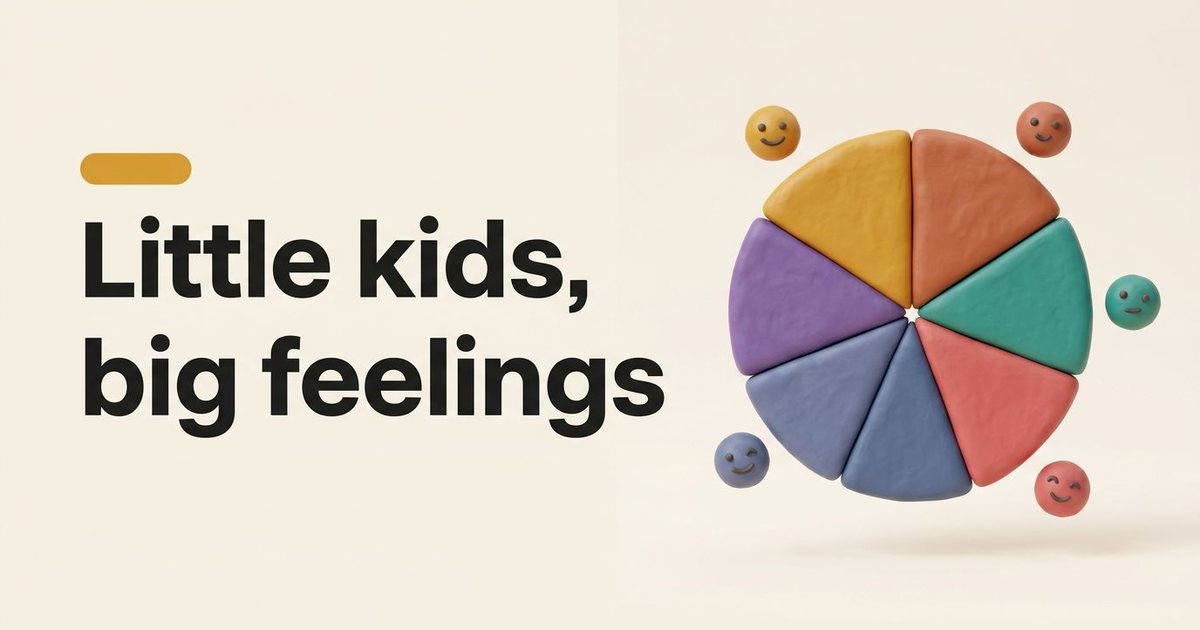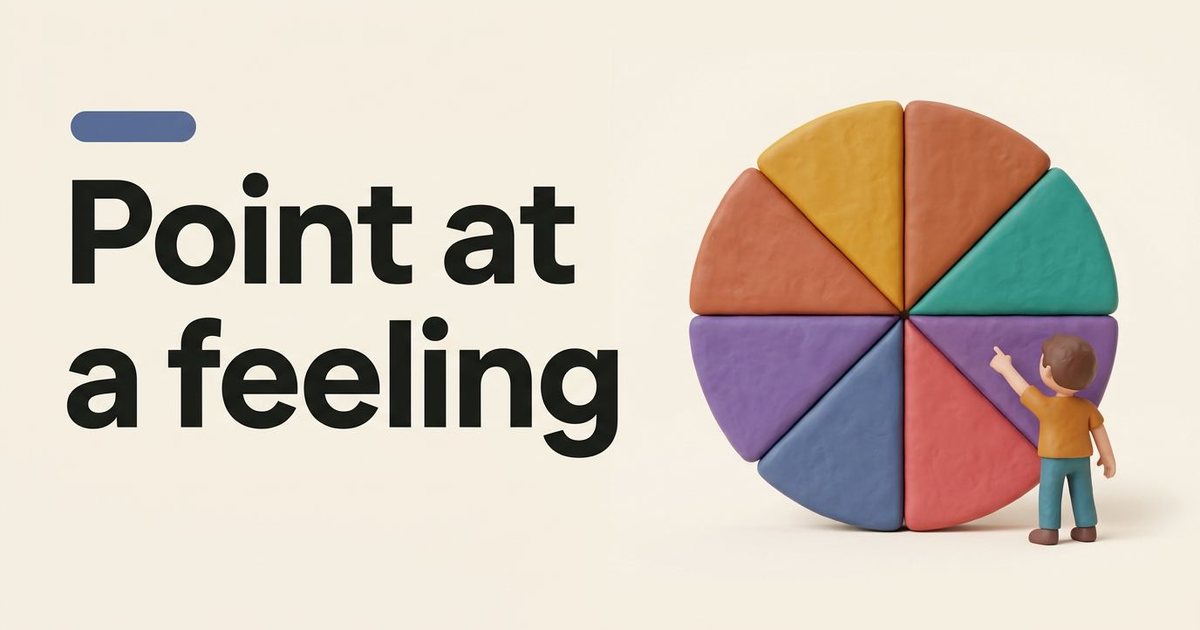
This is a free printable feelings wheel made for kids, with friendly faces and simple emotion words that children as young as three can point to. No email address, no signup, no watermark. Just download, print, and stick it somewhere your child can reach.
Feelings Wheel for Kids (PDF)Simple words and friendly faces for ages 3 to 10. Print it, stick it on the fridge.Free PDFNeed the grown-up version? Grab the full feelings wheel PDF instead.
What Makes a Kids Feelings Wheel Different
If you have ever handed a seven year old an adult feelings wheel, you already know the problem. Seventy words, half of them like "apprehensive" and "disillusioned," arranged in rings that mean nothing to a child. Their eyes glaze over before you finish explaining it.
A kids version works because it speaks their language. At the center sit six feelings every child already knows: happy, sad, mad, scared, loved, and surprised. The outer ring adds words kids actually use and hear on the playground, words like grumpy, worried, left out, proud, silly, and shy. There is no "melancholic" in sight.
The faces matter just as much as the words. Each feeling comes with a friendly, expressive face, which means a child who cannot read yet can still use the wheel. They can just point to words or pictures. That single design choice is what makes a feelings wheel work for a three year old and a nine year old at the same time.
Most of the time, it's not that children don't want to share how they feel. It's that they simply don't have the words. A wheel with the right words, at the right reading level, closes that gap.
How to Introduce the Wheel to Your Child
The biggest mistake is introducing the wheel mid-meltdown. A child in the middle of big feelings cannot learn a new tool. Introduce it during a calm, ordinary moment, like after dinner or during play, and treat it like a game rather than a lesson.
Then put it where life happens. The fridge is perfect. When the wheel lives at kid height in the kitchen, it becomes part of the furniture, and children start glancing at it without being asked. A laminated copy survives sticky fingers and lasts for years.
Ages 3 to 5: point at the faces
For the youngest kids, ignore the outer ring completely. Ask one simple question: "Can you point to the face that looks like how you feel?" Then you say the word for them: "That one looks scared. Are you feeling scared?" You are lending them your vocabulary until theirs grows in.
This is also where the point-dont-talk technique shines. Some kids, especially when upset, will not answer "how do you feel?" out loud, but they will point. Pointing asks less of them. There is no wrong answer to say, no words to find, just a finger and a face. Accept the point, name it gently, and move on.
Ages 6 to 10: name it, then rank it
Older kids can work with the outer ring. Start with the center: "Which of the big six is closest?" Then invite them one ring out: "Is it more like worried or more like left out?" Watching a child upgrade "sad" to "left out" is watching them understand their own experience for the first time.
Once they can name the feeling, add ranking: "How big is it, from 1 to 10?" A worried that is a 3 needs a hug and a snack. A worried that is a 9 needs a longer conversation. Ranking teaches kids that feelings come in sizes, and that even the big ones shrink.
The magic question: "where do you feel it in your body?"
After your child points to a feeling, try asking where it lives in their body. Kids give wonderfully concrete answers: "my tummy feels squeezy," "my face is hot," "my legs want to run." Connecting the word to the body sensation is exactly what emotion researchers mean by emotional awareness, and children pick it up faster than adults do. Over time, a squeezy tummy becomes an early warning system: your child starts noticing worry before it becomes a meltdown.
Using It in the Classroom or in Counseling
Teachers and school counselors use this printable as much as parents do. Here are the three setups we hear about most.
Morning meeting check-ins. Post the wheel at the front of the room and let each child point to their feeling as they settle in. It takes two minutes, it tells you which student needs a quiet word before math starts, and shy kids get to participate without speaking.
The calm-down corner. Laminate a copy and keep it in your regulation space next to the cushions and fidgets. A dysregulated child who cannot yet talk about what happened can point at grumpy or left out, and that point becomes the starting line for the conversation once they are calm.
Small groups and counseling sessions. Counselors use the wheel as a warm-up: each child points to one feeling from their week and shares as much or as little as they want. The wheel gives reluctant talkers a structure, and it gives the group a shared vocabulary that carries into the rest of the session.
Print as many copies as you need. The PDF is free for whole-class use, and it photocopies cleanly in black and white.
The Fastest Way Kids Learn Feeling Words
Here is the part no printable can do for you. Kids do not learn emotional vocabulary from a chart. They learn it from the adults around them, the same way they learn every other kind of word: by hearing it used out loud, in real situations, by people they love. Pediatricians make the same point in their guidance on children's emotional wellness.
That means the single most powerful thing you can do is narrate your own feelings. "I am feeling frustrated because traffic made us late." "I felt so proud watching you try again." "I am a little worried about tomorrow, so I am taking some deep breaths." Each sentence is a free lesson, and it teaches something the wheel alone cannot: that feelings are normal, nameable, and safe to say out loud.
The wheel on the fridge and your voice at the dinner table work as a team. The wheel gives your child the words. You show them how the words are used. Do both for a few months and you will hear it come back to you, usually when you least expect it: "Mama, I think I am feeling left out."
Frequently Asked Questions
What age is a feelings wheel for?
A kids feelings wheel works best from about age 3 to 10. Three to five year olds use the faces and the six center feelings, while six to ten year olds can use the more specific words in the outer ring. Older kids and teens usually graduate to an adult feelings wheel with a bigger vocabulary.
How many emotions should a kids wheel have?
Fewer than you might think. Six core feelings in the center and around 20 to 30 kid-friendly words in the outer ring is plenty. Adult wheels with 70 or more words overwhelm young children. The goal is a small set of words a child can actually remember and reach for.
How do I use a feelings wheel with a toddler?
Skip the words entirely and use the faces. Ask your toddler to point to the face that looks like how they feel, then say the word for them: "That face looks sad. Are you feeling sad?" You are doing the labeling on their behalf until their own vocabulary catches up.
Can teachers print this for a whole class?
Yes. The PDF is completely free for classroom, counseling, and home use. Print as many copies as you need for your students, laminate them for a calm-down corner, or send them home with families. No email signup or license is required.
What if my child will not engage with it?
Do not force it. Leave the wheel somewhere visible, like the fridge, and start using it yourself out loud: "I am feeling frustrated because we are running late." Kids who refuse a sit-down lesson will often wander over and point at a face a week later, on their own terms.