What Is the Feelings Wheel?
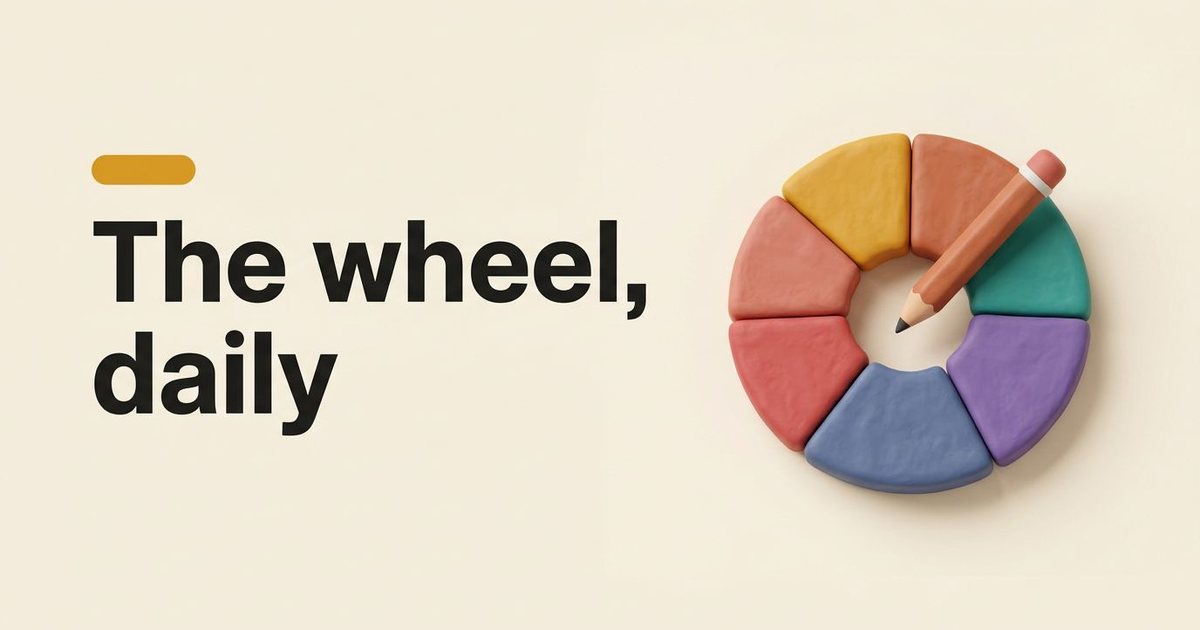
The feelings wheel is a circular diagram that organizes human emotions from the most general at the center to the most specific at the outer edge. Picture a target with three concentric rings. The innermost ring holds a handful of broad, primary emotions (like joy, sadness, or anger). The middle ring breaks those down into more specific states. The outer ring refines them even further, giving you a precise word for what you are actually feeling.
Dr. Gloria Willcox introduced the first widely recognized feelings wheel in the 1980s. Her goal was practical: give people, especially those in therapy and counseling, a visual vocabulary for emotions. Before the wheel existed, many clients struggled to describe their inner experience. They would say "I feel bad" or "I feel weird," and the conversation would stall. The wheel changed that by turning an abstract, internal experience into something you could literally point to.
Since then, dozens of variations have appeared. Some have five primary emotions; others have eight. Some add a fourth ring; some use color coding or illustrations to make the experience more intuitive. What every version shares is the same fundamental insight: emotions have layers, and the more precisely you can name those layers, the more clearly you understand yourself.
Today the feelings wheel shows up in therapists' offices, school classrooms, corporate wellness programs, and journaling apps. Its popularity has grown because it solves a genuine problem. Most of us were never formally taught the language of emotions. We learned the basics as children ("happy," "sad," "mad"), then stopped expanding our vocabulary. The feelings wheel picks up where that childhood education left off.
Why Naming Your Emotions Matters
Naming an emotion does more than describe it. According to a growing body of neuroscience research, the simple act of putting a feeling into words can change the way your brain processes that feeling.
UCLA neuroscientist Matthew Lieberman conducted a landmark study using fMRI brain scans that demonstrated a phenomenon he calls "affect labeling." When participants looked at images of angry or fearful faces, their amygdala (the brain's threat detection center) lit up with activity. But when they were asked to label the emotion they saw with a specific word, their amygdala activity decreased significantly. At the same time, activity increased in the right ventrolateral prefrontal cortex, a region associated with processing language and regulating emotional responses. In other words, naming the emotion recruited the thinking brain and quieted the reactive brain.
Lieberman described this as "putting on the brakes." You are not suppressing the emotion or pretending it does not exist. Instead, you are giving your brain an additional tool for processing it. The emotion is still there, but its grip loosens.
This leads to a concept that psychologist Lisa Feldman Barrett has studied extensively: emotional granularity. Barrett's research on constructed emotion shows that people who can distinguish between finely grained emotional states (for example, telling the difference between "disappointed" and "discouraged") tend to regulate their emotions more effectively than people who lump everything under broad labels like "bad" or "upset."
High emotional granularity is not just an interesting personality trait. Barrett's research, along with studies from Todd Kashdan and others, links it to concrete outcomes: fewer unwanted emotional outbursts, less reliance on harmful coping strategies like binge drinking, greater resilience in the face of stress, and a richer sense of overall well-being. People with more precise emotional vocabularies are also better at choosing appropriate responses to difficult situations, because they understand the nuances of what they are feeling.
The feelings wheel is one of the most accessible tools for building emotional granularity. It does the hard work of organizing emotional language into a visual structure, making it easy to move from a vague sense of discomfort to a specific, nameable experience.
The 6 Primary Emotions
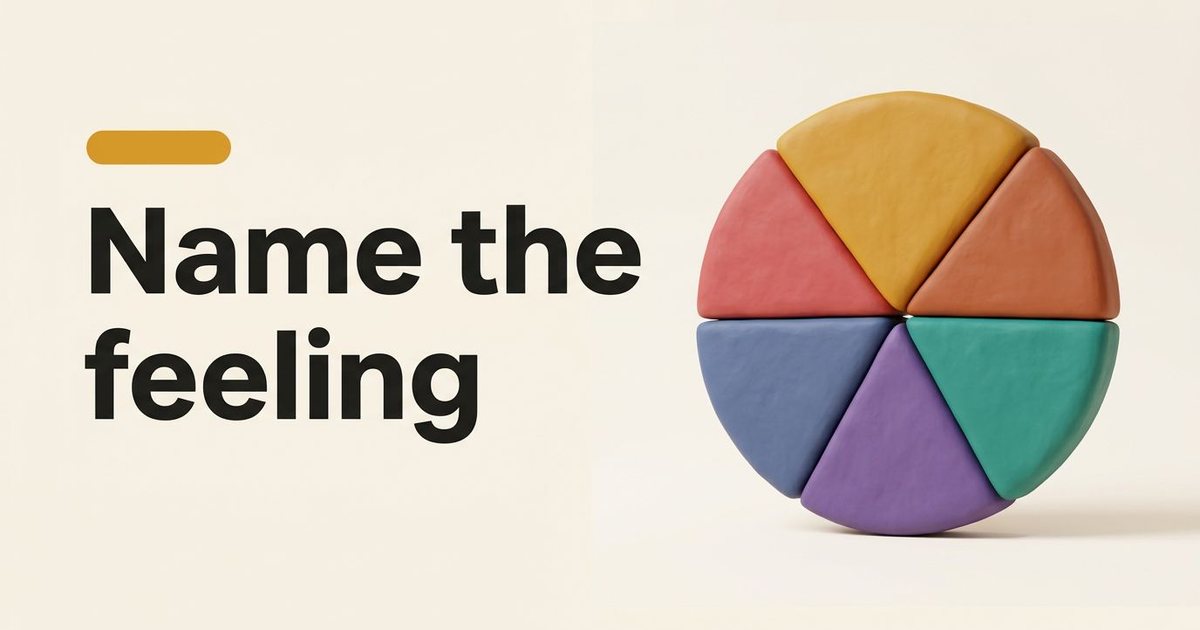
Most versions of the feelings wheel begin with a set of primary emotions at the center. These are broad categories that capture the major families of human feeling. In the model we use at Puffy, there are six primary emotions, each with its own set of more specific sub-emotions branching outward. Here is a closer look at each one.
Joy
- Happiness
- Contentment
- Excitement
- Pride
- Optimism
- Enthusiasm
Love
- Affection
- Tenderness
- Compassion
- Warmth
- Caring
- Fondness
Surprise
- Amazement
- Astonishment
- Awe
- Wonder
- Confusion
- Shock
Fear
- Anxiety
- Worry
- Nervousness
- Dread
- Panic
- Apprehension
Sadness
- Grief
- Loneliness
- Disappointment
- Melancholy
- Hopelessness
- Hurt
Anger
- Frustration
- Irritation
- Resentment
- Rage
- Bitterness
- Annoyance
Joy
Joy is the emotion of positive engagement with life. It includes everything from quiet contentment to full-throated excitement. When you feel joy, your body tends to feel lighter, your posture opens up, and you naturally want to share the experience with others. Sub-emotions in this family include happiness, contentment, excitement, pride, optimism, and enthusiasm. Notice the range: pride feels very different from enthusiasm, even though both live under the same umbrella. That specificity matters.
Love
Love captures the emotions of connection and care. It is not limited to romantic love; it includes the warmth you feel toward a close friend, compassion for a stranger, and tenderness toward a child or pet. Sub-emotions include affection, tenderness, compassion, warmth, caring, and fondness. Recognizing which shade of love you feel helps you understand the nature of your relationships more clearly.
Surprise
Surprise is the emotion of encountering the unexpected. It can be positive (awe, wonder, amazement) or disorienting (confusion, shock). What makes surprise unique among the primary emotions is that it is often the shortest in duration. Surprise quickly gives way to another emotion: the amazement might turn into joy, or the shock might transition into fear. Naming the specific flavor of surprise helps you track where your emotions go next.
Fear
Fear is the emotion of perceived threat or danger. It served an essential survival function throughout human evolution, and it remains deeply wired into our nervous systems. In modern life, fear most commonly shows up as anxiety, worry, or nervousness rather than raw terror. Sub-emotions include anxiety, worry, nervousness, dread, panic, and apprehension. Distinguishing between worry (a cognitive, future-focused state) and dread (a heavier, more visceral sensation) can help you choose the right response.
Sadness
Sadness is the emotion of loss, disconnection, or unmet need. It slows you down, turns your attention inward, and often signals that something important to you has been affected. Sub-emotions include grief, loneliness, disappointment, melancholy, hopelessness, and hurt. Each of these points toward a different kind of loss. Grief is about something or someone gone. Loneliness is about connection missing. Disappointment is about expectations unmet. Knowing the difference shapes how you process and heal.
Anger
Anger is the emotion of boundaries being crossed or needs being blocked. Despite its reputation, anger is not inherently destructive. It carries important information about what matters to you and where your limits are. Sub-emotions include frustration, irritation, resentment, rage, bitterness, and annoyance. There is a vast difference between mild irritation and deep-seated resentment, and treating them the same way usually leads to problems. Naming the specific type of anger gives you a clearer path forward.
How to Use the Feelings Wheel Step by Step
Using the feelings wheel does not require any special training. It is designed to be intuitive. Here is a simple, four-step process you can follow every time you want to check in with yourself.
- Start at the center. Look at the primary emotions and ask yourself: which broad category best describes what I am feeling right now? Do not overthink it. Your first instinct is usually accurate. If you are torn between two, that is fine; pick the one that feels strongest.
- Move outward. Once you have identified the general family, look at the more specific emotions in the next ring. Which word resonates? Does "frustrated" land differently than "irritated"? Does "anxious" feel more accurate than "nervous"? Let the words wash over you and notice which one clicks. You may feel a subtle sense of recognition, almost like relief, when you find the right word.
- Sit with it. After you name the emotion, pause for a moment. Notice where you feel it in your body. Notice if the emotion shifts once you name it (this is common; naming often takes the edge off). There is no need to fix or change anything. Simply observing with curiosity is enough.
- Record it. Write it down, say it out loud, or tag it in a journal entry. The act of externalizing the emotion, whether on paper, in a voice recording, or through an app, deepens the affect labeling process and creates a record you can review later.
Tip: Do not spend more than a minute or two on this process. The feelings wheel is meant to be a quick check-in, not a prolonged analysis. If you cannot decide between two words, pick either one. Precision is helpful, but perfectionism defeats the purpose.
Over time, you will find that you need the visual wheel less and less. Your emotional vocabulary will grow naturally, and you will start naming emotions in real time without needing to consult the diagram. That is the goal: the wheel is training wheels (no pun intended) for a skill that eventually becomes second nature.
The Feelings Wheel in Journaling
Journaling and the feelings wheel are natural partners. A journal gives you a place to explore your emotions in depth, a practice with well-documented health benefits, and the feelings wheel gives you a starting point so you are not staring at a blank page wondering what to write.
The simplest approach is to begin each journal entry by selecting an emotion from the wheel. Before you write a single word about your day, check in: what am I feeling right now? Tag the entry with that emotion. Then write freely, using the emotion as an anchor for your reflection.
This tagging practice becomes powerful over time. When you tag your entries consistently, you build a dataset of your emotional life. After a few weeks, patterns start to emerge. You might notice that "anxious" entries cluster on Sunday evenings. You might see that "contentment" appears most often after entries where you describe spending time outdoors. You might realize that "resentment" has been slowly building over the past month, pointing to a relationship or situation that needs attention.
These patterns are nearly impossible to spot in real time. Day to day, your emotional landscape feels random and reactive. But when you zoom out and look at weeks or months of tagged entries, the structure becomes visible. You start to see your triggers, your cycles, and your baseline emotional states.
Voice journaling adds another dimension. When you speak your thoughts aloud rather than typing them, you capture not just the content of your reflection but the emotional texture of your voice. Combined with an emotion tag from the feelings wheel, a voice journal entry becomes a rich, multi-layered record of your inner state.
The key to making this work is consistency, not perfection. You do not need to write long entries or pick the perfect emotion every time. A 30-second voice note tagged with "disappointed" is more valuable than a beautifully written essay with no emotional label at all.
Emotional Granularity and Mental Health
The concept of emotional granularity goes deeper than having a big vocabulary. It reflects a fundamental difference in how people experience and process their emotions, and research increasingly links it to mental health outcomes.
In a 2015 study published in the journal Psychological Science, Todd Kashdan and colleagues found that people with higher emotional granularity used a wider range of emotion regulation strategies and were less likely to respond to negative experiences with aggressive or self-destructive behavior. When you can tell the difference between "frustrated" and "betrayed," you are more likely to choose a response that actually addresses the situation rather than lashing out indiscriminately.
Lisa Feldman Barrett's theory of constructed emotion offers a framework for understanding why this matters. Barrett argues that emotions are not hardwired circuits that fire automatically. Instead, your brain constructs emotional experiences by combining sensory input, past experience, and conceptual knowledge (including your vocabulary for emotions). When you have more emotional concepts available to you, your brain has more tools for making sense of ambiguous internal signals.
Think of it this way. If you only have the word "bad" in your emotional toolkit, every negative experience gets lumped together. Your brain treats a minor inconvenience the same way it treats a genuine crisis, because it only has one category for both. But if you have words like "mildly annoyed," "overwhelmed," "heartsick," and "exasperated," your brain can construct a more precise experience, and that precision leads to more proportionate responses.
The good news is that emotional granularity is a learnable skill, not a fixed trait. Studies show that people who practice labeling their emotions regularly (through therapy, journaling, or tools like the feelings wheel) increase their granularity over time. It is a form of emotional fitness: the more you exercise the skill, the stronger it gets.
Clinical psychologists have noted that low emotional granularity correlates with higher rates of depression, anxiety disorders, and difficulty in interpersonal relationships. Conversely, improving your ability to name specific emotions has been shown to enhance the effectiveness of therapeutic interventions, including cognitive behavioral therapy and acceptance and commitment therapy. The feelings wheel is one straightforward way to start building that capacity.
How Puffy Uses the Feelings Wheel
Puffy was built around a simple belief: understanding your emotions should not require a therapy session or a complicated self-help system. It should be as easy as talking to yourself for a minute and tapping a color.
Here is how it works. You open the app, hit record, and talk about whatever is on your mind. There are no prompts to follow and no rules about what to say. Speak for 20 seconds or 20 minutes. When you are done, Puffy transcribes your entry and asks you one question: how are you feeling? A feelings wheel appears on screen, organized around the six primary emotions described in this article. You tap the one that fits (or tap a sub-emotion for more specificity), and your entry is saved.
Over days, weeks, and months, these tagged entries accumulate into a personal emotional timeline. Puffy surfaces patterns you might not notice on your own. Maybe your "fear" entries spike every time a work deadline approaches. Maybe "joy" clusters around weekends when you visit family. Maybe you have been logging "loneliness" more frequently than you realized, and seeing it laid out in front of you is the nudge you need to reach out to someone.
The combination of voice journaling and emotion tagging is deliberate. Speaking out loud captures thoughts that might never make it onto a written page. And tagging with the feelings wheel ensures that every entry carries structured emotional data, not just a freeform stream of words. That structure is what makes patterns visible and actionable.
Puffy does not tell you what to feel or how to fix your emotions. It gives you a mirror. A clear, honest, color-coded mirror that shows you the shape of your emotional life over time. The feelings wheel is the foundation of that mirror, and every entry you record adds another data point to the picture.
Frequently Asked Questions
What is the feelings wheel used for?
The feelings wheel is a tool for identifying and naming your emotions with greater specificity. It helps you move beyond vague descriptions like "fine" or "bad" and pinpoint the exact emotion you are experiencing, such as "disappointed" or "apprehensive." Therapists, counselors, journalers, and educators all use it to build emotional awareness.
Who created the feelings wheel?
The original feelings wheel was created by Dr. Gloria Willcox in the 1980s. Since then, many variations have been developed by therapists, researchers, and mental health organizations. The core structure (primary emotions at the center, more specific emotions in outer rings) remains consistent across versions.
How many emotions are on the feelings wheel?
The number of emotions varies by version, but most feelings wheels include 6 primary emotions at the center and between 60 and 130 more specific emotions in the outer rings. Puffy's version uses 6 primary emotions (joy, love, surprise, fear, sadness, and anger) with over 70 sub-emotions across all categories.
Can children use the feelings wheel?
Yes. The feelings wheel is widely used in schools and child therapy settings. Younger children can start with just the 6 primary emotions at the center, then gradually explore the outer rings as their vocabulary and self-awareness develop. Visual versions with color coding and illustrations work especially well for kids.
How often should I use the feelings wheel?
There is no strict rule, but using it once or twice a day is a good starting point. Many people find it helpful to check in with the wheel during their morning routine and again in the evening. Over time, naming your emotions becomes more natural and you may not need the visual reference as often.
What if I feel multiple emotions at once? Can the feelings wheel handle that?
Absolutely. Feeling multiple emotions simultaneously is completely normal. You might feel both excited and anxious about a new opportunity, or both relieved and sad after a difficult conversation ends. The feelings wheel encourages you to name each emotion separately rather than collapsing them into a single label. This practice helps you understand the full texture of your experience.