Most people who keep a journal write about what happened during their day. Fewer write about how those events made them feel. And almost nobody names their feelings with real precision. That gap between "something happened" and "here is exactly how it landed emotionally" is where some of the deepest self-understanding lives. The feelings wheel is a tool designed to close that gap, and when you pair it with a regular journaling practice, the results compound in surprising ways.
Why Emotions and Journaling Belong Together
Journaling without naming emotions is like tracking your finances without categorizing expenses. You know money is moving, but you cannot see where it goes. A journal full of narrative captures the events of your life without illuminating the emotional currents running beneath them.
Neuroscience research has shown that labeling an emotion (a process called "affect labeling") reduces activity in the amygdala, the brain's threat detection center. UCLA neuroscientist Matthew Lieberman demonstrated this in fMRI studies: when participants put a specific word to an emotional experience, their prefrontal cortex became more active while amygdala activation decreased. Naming what you feel literally calms the part of your brain that reacts to what you feel.
A journal is the ideal place for this labeling to happen, and expressive writing carries emotional and physical health benefits of its own. Unlike conversation (where social dynamics make you self-conscious) or therapy (which happens only once a week), a journal is available every day, on your own terms. When you add an emotion label to each entry, you practice affect labeling consistently, and that consistency builds lasting emotional awareness.
How to Pair the Feelings Wheel with Each Entry
There are three practical approaches. Each one works; the best choice depends on your personality and goals.
Check In Before You Write
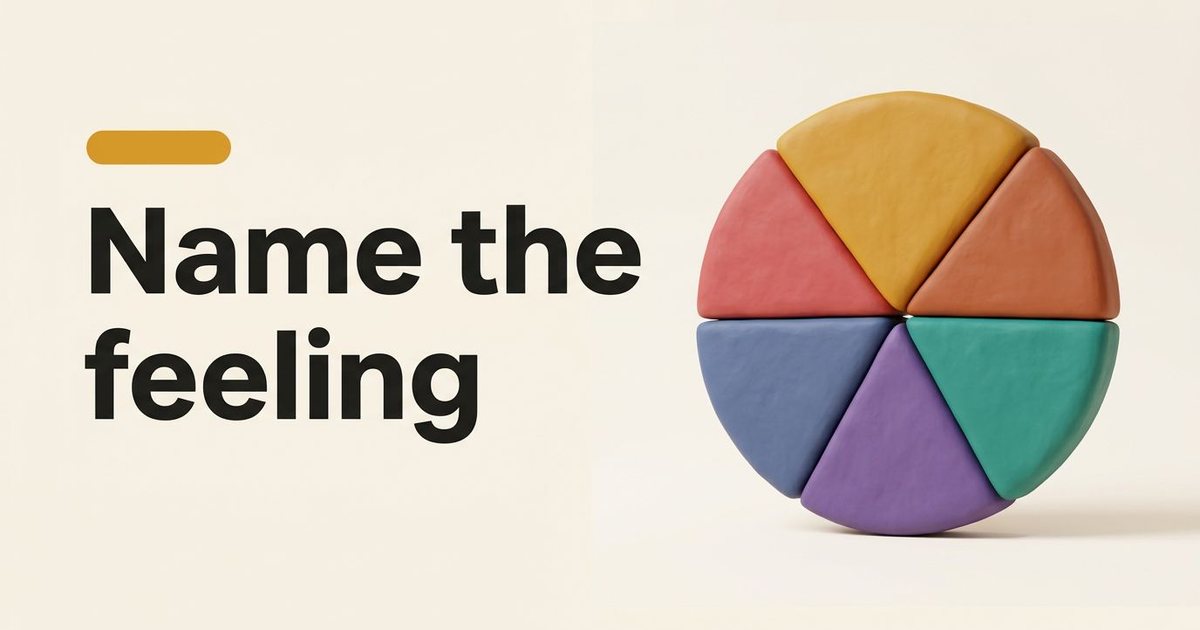
Before you write or record a single word, consult the feelings wheel. Start at the center with the six primary emotions (joy, love, surprise, fear, sadness, anger) and identify which one best describes your current state. Move outward for more specificity. Tag your entry before journaling. This approach works well if you tend to get lost in narrative; the emotion tag acts as an anchor.
Tag After You Write
Write or speak freely first, then consult the wheel afterward. Ask: what emotion was running through this entry? This method is useful if you prefer unstructured journaling. It sometimes reveals emotions you were not aware of while writing.
Both Before and After
Tag an emotion at the start, journal freely, then tag again at the end. This dual-tag method captures emotional shift. You might begin an entry feeling "overwhelmed" and end up at "relieved." Tracking these shifts over time reveals how journaling itself changes your emotional state.
Whichever approach you choose, the key principle is the same: every journal entry should carry at least one emotion tag. Without it, you have a diary. With it, you have an emotional dataset.
What Patterns to Look For
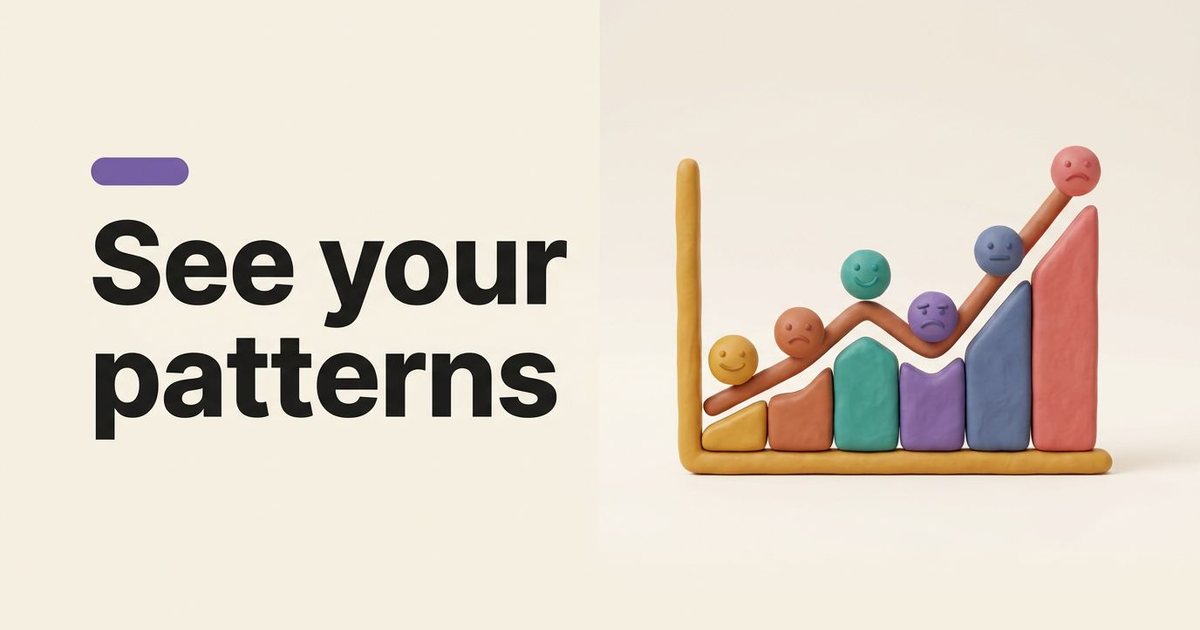
The real value of emotion-tagged journaling appears when you zoom out and look at weeks or months of data.
Recurring Emotions
After two to three weeks, review your entries and count which emotions appear most frequently. Many people discover that one emotion dominates far more than they expected. You might think of yourself as generally calm, only to find "anxious" in 60 percent of your entries.
Time-of-Day Trends
If you journal at different times, look for patterns tied to the clock. Some people are consistently more anxious in the morning and more settled by evening. These patterns inform practical decisions: if anxiety peaks at 7 a.m., a morning journaling session becomes a targeted intervention.
Trigger Events
Look at entries tagged with your most intense emotions and ask what happened right before. Did "anger" cluster around a particular person? Did "sadness" follow specific situations? Identifying triggers gives you the option to prepare, respond differently, or set boundaries.
Emotional Drift
Scan your tags across several months. A slow increase in "frustration" over six weeks might signal burnout before you consciously recognize it. A gradual rise in "joy" after starting a new routine confirms the change is working. This long-range view is nearly impossible without consistent tagging.
A Sample Week of Emotion-Tagged Entries
Here is what a week of emotion-tagged journal entries might look like. Notice how each entry is short, honest, and anchored by a specific emotion from the feelings wheel.
Big presentation tomorrow. I keep rehearsing it in my head and imagining everything going wrong. My chest feels tight.
The presentation went well. My manager said it was the clearest explanation she had heard. I did not expect that.
A coworker took credit for an idea I brought up last week. I did not say anything and now I am annoyed at both of us.
Quiet evening at home. Cooked a new recipe, read for an hour. Nothing remarkable, and that felt like enough.
Friends canceled plans. I spent the evening scrolling my phone and feeling disconnected.
Signed up for a weekend hiking group. The first trip is next Saturday. It feels good to have something to look forward to.
The week ahead already feels heavy. I noticed this Sunday-evening dread is becoming a pattern.
Even from this single week, patterns are visible. Fear-family emotions bookend the work week. Joy-family emotions cluster around accomplishments and simple pleasures. The Sunday-evening dread is exactly the kind of signal that becomes obvious with consistent tagging.
Moving Beyond "Fine" and "Stressed"
Ask most people how they feel and you will get one of a handful of words: "fine," "good," "tired," "stressed." These are not emotions. They are conversational defaults that compress a complex inner experience into something socially acceptable and easy to say.
"Stressed" is a particularly common catch-all. But stress is not a single emotion; it can contain anxiety, frustration, overwhelm, dread, or resentment, each pointing to a different cause and calling for a different response. If you tag every difficult day as "stressed," your journal data tells you nothing beyond "things were hard." If you tag Monday as "overwhelmed" and Wednesday as "resentful," you have two distinct threads to pull on.
The feelings wheel exists precisely for this purpose. It takes the vague hum of "I feel bad" and offers you dozens of specific words. You just need to spend 10 seconds looking at the wheel and asking, "Which of these is closest to what I actually feel right now?" Over time, words that once felt unfamiliar ("wistful," "apprehensive," "exasperated") start to feel like precise descriptions of states you always experienced but never had the language for. This is emotional granularity in action.
Building the Habit
- Pair it with an existing routine. Attach your journaling session to something you already do: morning coffee, your commute, or the last thing before bed. Habit stacking dramatically increases consistency.
- Keep it under two minutes. A single paragraph plus an emotion tag is a complete entry. Lowering the bar makes the habit nearly frictionless.
- Do not aim for perfection. An imperfect tag is infinitely more useful than no tag at all. The practice of choosing is what builds the skill.
- Review weekly. Set aside 10 minutes at the end of each week to scan your emotion tags. This review is where the "aha" moments happen.
How Puffy Makes This Automatic
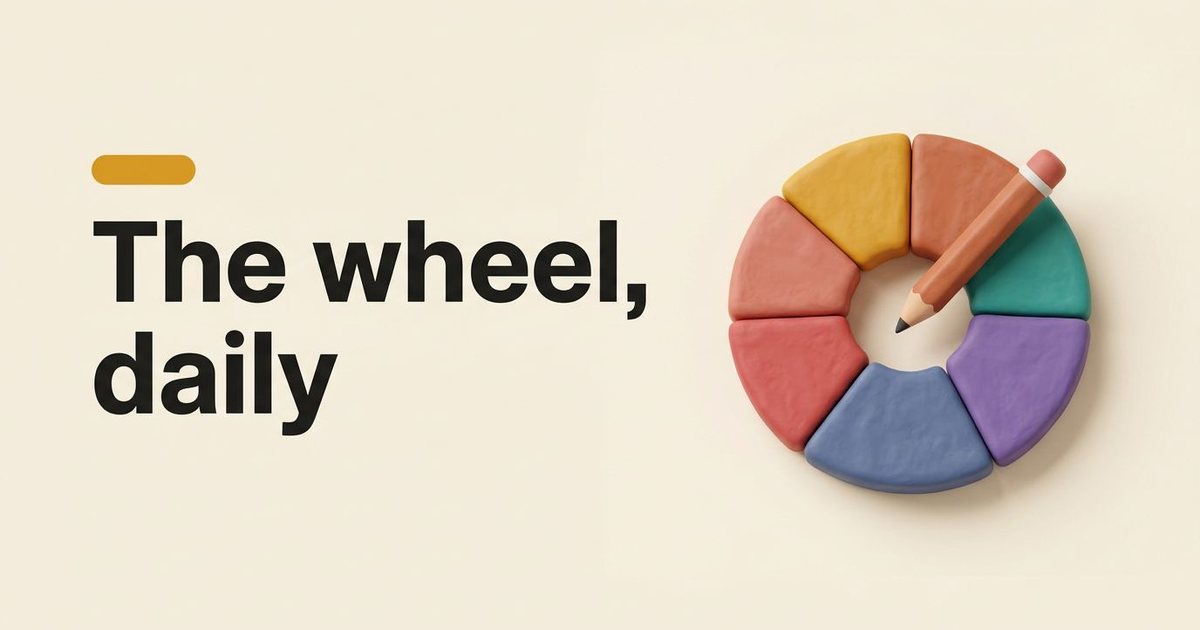
Puffy was designed to make emotion-tagged journaling as simple as possible. You open the app, tap record, and talk about whatever is on your mind. When you finish, Puffy transcribes your entry automatically. Then a built-in feelings wheel appears, organized around six primary emotions with dozens of sub-emotions. You tap the one that fits. Speak, tap, done.
Because every entry is tagged with a specific emotion, Puffy builds your emotional dataset over time without extra effort. You can view trends across weeks and months, spot recurring patterns, and see how your emotional landscape shifts. Voice journaling also removes the biggest barrier to consistency: the blank page. Speaking is faster and more natural than writing for most people, and it captures the emotional texture of your voice alongside the content of your words.
If you have tried journaling before and struggled to keep it up, pairing the feelings wheel with your practice is one of the highest-leverage changes you can make. For more on tracking emotions beyond journaling, see our guide on how to track your emotions daily.